

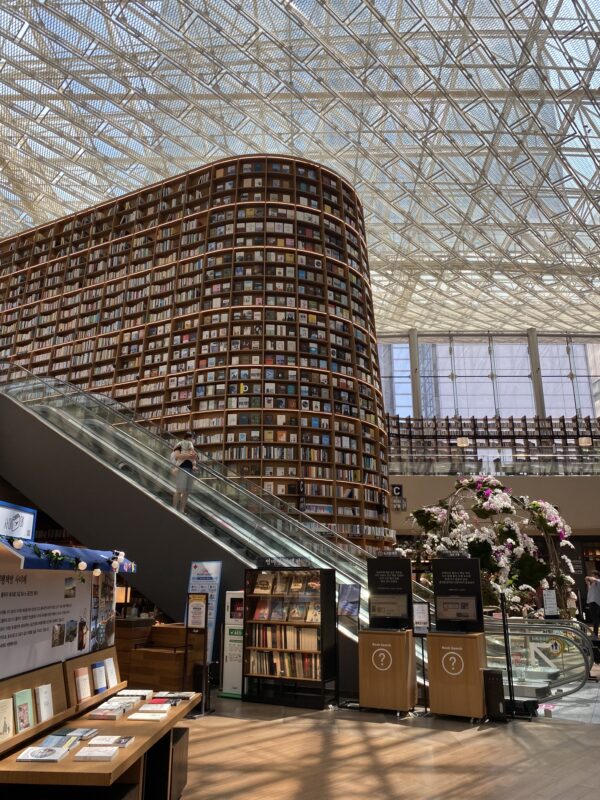
During the pandemic, when travel was off the table, reading became my personal passport to the world. Prose is such an amazing way to explore different historical periods, cultures, or social issues. Even when a story isn’t strictly accurate, the writing style, central themes, or how certain subjects are treated feel so distinctive.
While Russian novels seem to dive deep into the human psyche with layered moral and philosophical questions, Americans tend to focus more on a fast pace and the protagonist’s personal transformation. German authors love to get weirdly philosophical (Kafka, anyone?), and Korean writing? It excels at weaving emotional subtlety, familial bonds, societal pressure, and historical memory into tender, almost lyrical prose that stays with you long after you’ve turned the last page.
My time is currently spent under a beach umbrella, simultaneously hiding from and enjoying the sun, with the audiobook version of one of my all-time favourite novels plugged into my ears. I thought about introducing some of my favourite novels across various genres that have one thing in common: they’re all written by Korean or Korean-American writers.
From quietly devastating psychological thrillers to sweeping multi-generational sagas, these authors have been carving out extraordinary spaces in contemporary literature. These are books that linger on your mind, your skin, your shelf. Whether you’re in the mood for emotional intensity, bold political undercurrents, or just a good story, here’s a list of titles that you should not miss.
KOREAN WRITERS
The Vegetarian by Han Kang
A woman has a dream, and one day simply refuses to eat meat. What begins as a quiet act of defiance spirals into a surreal and disturbing transformation. This novel, structured in three parts told from different perspectives, examines the fragility of identity, the violence of control, and the slow unravelling of a life. It’s both tender and brutal, with prose that cuts like glass. Han Kang, born in Gwangju and raised in Seoul, is a poet and novelist whose work explores beauty, trauma, and alienation with eerie elegance. She received the International Booker Prize for this book.
Kim Jiyoung, Born 1982 by Cho Nam-joo
Kim Jiyoung is everywoman—and that’s the point. Her story begins with her slow psychological breakdown, but the real crisis is social: sexism so embedded in daily life it becomes invisible until it breaks you. Cho Nam-joo’s sharp, clear-eyed narrative struck a nerve in Korea and sparked real-life feminist debate. The author, a former TV scriptwriter, channels her rage and clarity into an unassuming but powerful novel that reads like a quiet manifesto.
Fun Fact: I was born in 1982, albeit in a different part of the world. Therefore, I can relate to some of the issues, whereas others feel completely foreign to me.
The Girl Who Wrote Loneliness by Kyung-sook Shin
In this autobiographical coming-of-age novel, a young woman working in a sweatshop in 1970s Seoul dreams of becoming a writer. As she confronts poverty, class division, and the ache of loneliness, she learns to observe the world around her with resilience and longing. Kyung-sook Shin draws from her own experiences, crafting something intimate and unvarnished. She was the first South Korean to win the Man Asian Literary Prize, and she’s particularly gifted at exploring what’s left unsaid in families and society.
Please Look After Mom by Kyung-sook Shin
When an elderly mother goes missing in the chaos of a Seoul subway station, her family is forced to confront not only their grief but their long-standing neglect. Told from multiple perspectives, this novel peels back the myths families tell themselves and asks how well we truly know those closest to us. It’s a slow burn, soaked in regret. Shin’s writing here is deceptively simple, but the emotional weight creeps up on you.
The Hole by Hye-young Pyun
After a devastating car accident, Ogi wakes up paralysed and entirely dependent on his mother-in-law. What follows is a slow descent into dread, as the woman’s quiet bitterness and Ogi’s helplessness blur the line between caregiver and captor. Claustrophobic and disturbing, this is Korean literary noir at its finest. Hye-young Pyun specialises in stories that blend psychological horror with existential unease—bleak, but beautifully constructed.
The Good Son by You-Jeong Jeong
You think you know yourself—until you wake up covered in blood with no memory of what happened the night before. This psychological thriller is told from the perspective of a seemingly calm and gifted young man with a chilling secret. As the story unfolds, so does the unsettling truth. You-Jeong Jeong, often dubbed Korea’s queen of crime fiction, creates tension through interiority. Her villains are disturbingly quiet, her plots razor-sharp.
Firebird by Lee Young-do
For those craving epic fantasy, Lee Young-do’s Firebird delivers high-stakes world-building and morally complex characters in a richly imagined universe. Unlike many Western fantasy sagas, this one weaves Korean narrative rhythms into its structure. The storytelling feels both familiar and refreshingly new. Lee is considered a founding father of Korean fantasy, with a devoted following and a reputation for crafting ethically ambiguous, long-arc narratives that challenge genre conventions.
KOREAN AMERICAN WRITERS
Pachinko by Min Jin Lee
This sweeping historical novel traces four generations of a Korean family living in Japan, beginning with a teenage girl who becomes pregnant by a wealthy older man. What follows is a story of resilience, identity, sacrifice, and dignity in the face of systemic discrimination. The detail is exquisite, and the pacing gentle but unrelenting. Min Jin Lee, born in Seoul and raised in Queens, writes with both the precision of a historian and the tenderness of a storyteller.
Crying in H Mart by Michelle Zauner
This memoir begins in an Asian supermarket and ends in heartbreak. Michelle Zauner, known to many as the frontwoman of indie band Japanese Breakfast, writes about losing her Korean mother to cancer and the complicated grief that comes with biracial identity. Food is memory here—each dish a fragment of love, culture, or regret. Zauner’s writing is raw, funny, and deeply intimate. It’s one of those rare memoirs that feels like sitting in someone’s kitchen while they tell you the truth.
The Girl Who Fell Beneath the Sea by Axie Oh
Inspired by Korean mythology, this YA fantasy follows Mina, who sacrifices herself to the Sea God to save her brother’s beloved. She finds herself in a dreamlike spirit world, navigating gods, curses, and destiny. There’s a lyrical, visual quality to the writing—Ghibli-esque, but with more grit. Axie Oh, a Korean American author, blends myth and emotion with great skill, and her work is perfect for readers who love a mix of whimsy and world-saving stakes.
A Small Revolution by Jimin Han
What begins as a hostage situation in a university classroom becomes a meditation on loss, trauma, and the politics of youth. Told through flashbacks and fragments, it follows a young woman trapped between past and present. There’s a quiet intensity to Han’s writing, and though the book is short, it doesn’t let you off easy. Jimin Han writes about identity, memory, and violence in ways that feel timely and personal.
KOREAN BRITISH WRITERS
White Chrysanthemum by Mary Lynn Bracht
Set during World War II, this novel tells the parallel stories of two sisters in Korea—one captured and forced into sexual slavery as a “comfort woman,” the other searching for her across decades. It’s painful and beautiful, refusing to look away from the horrors of war. Bracht, a Korean American author raised in the UK, channels intergenerational pain with sharp empathy. The novel sheds light on a history too often buried, giving voice to those long silenced.
Whether you’re looking for a gripping thriller, a sweeping family saga, or a slim novel that punches far above its weight, Korean literature—and literature by the Korean diaspora—offers something urgent, moving, and vital. These writers are shaping the literary landscape in their own distinct voices, and it’s worth paying attention.
Did any of these spark your interest? Do you have any additional recommendations for me? Let me know in the comments.